
Car care
How often should you actually reapply a ceramic coating?
Less often than the marketing suggests, and later than most owners assume.
By Telmo Antunes · Published August 11, 2026 · 3 min read
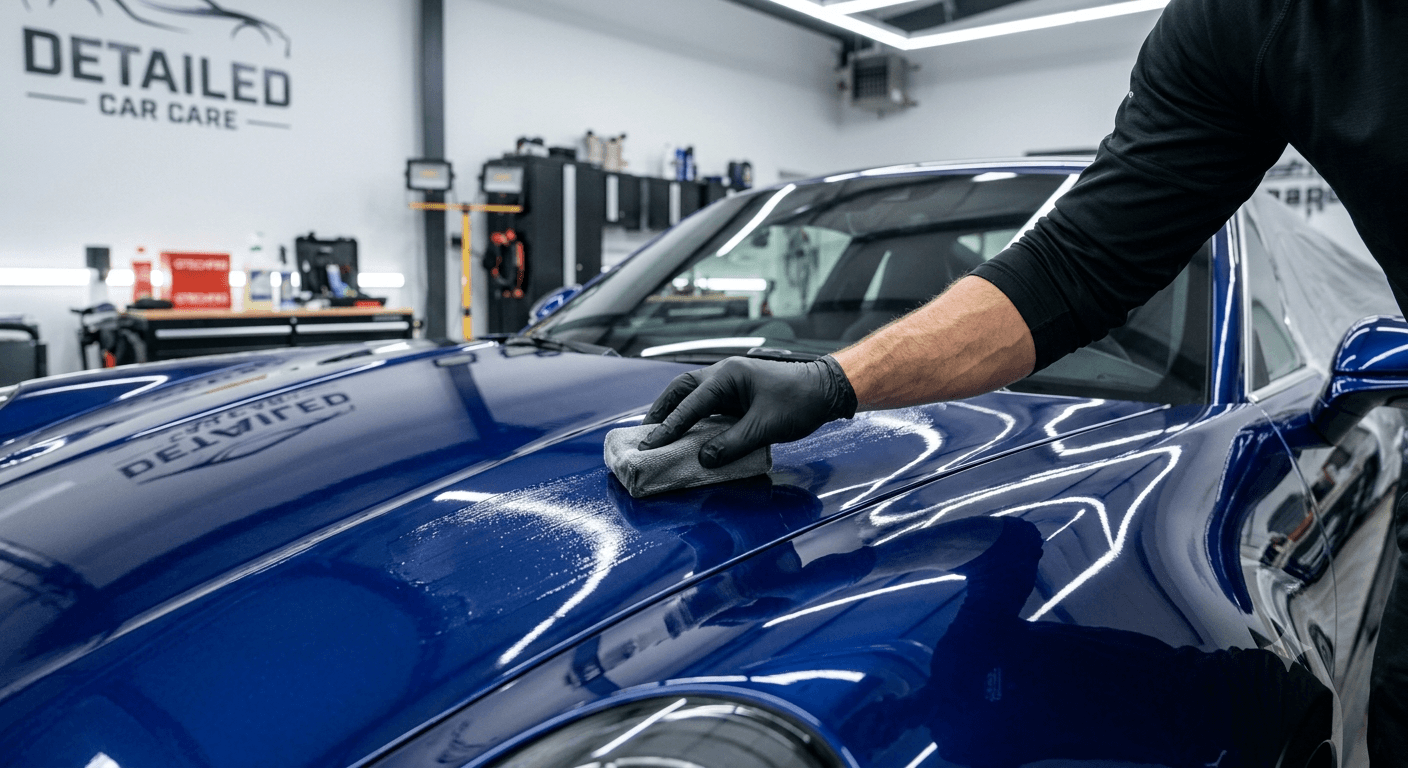
Coatings are usually sold with a number attached — three years, five years, nine. Those numbers describe a best case under ideal conditions, not a schedule.
A coating does not stop working on a particular date. It wears down, unevenly, starting where the car takes the most abuse. So the useful question is not "how long has it been?" but "where is it now?"
Read the water, not the calendar
The cheapest diagnostic you have is a hose.
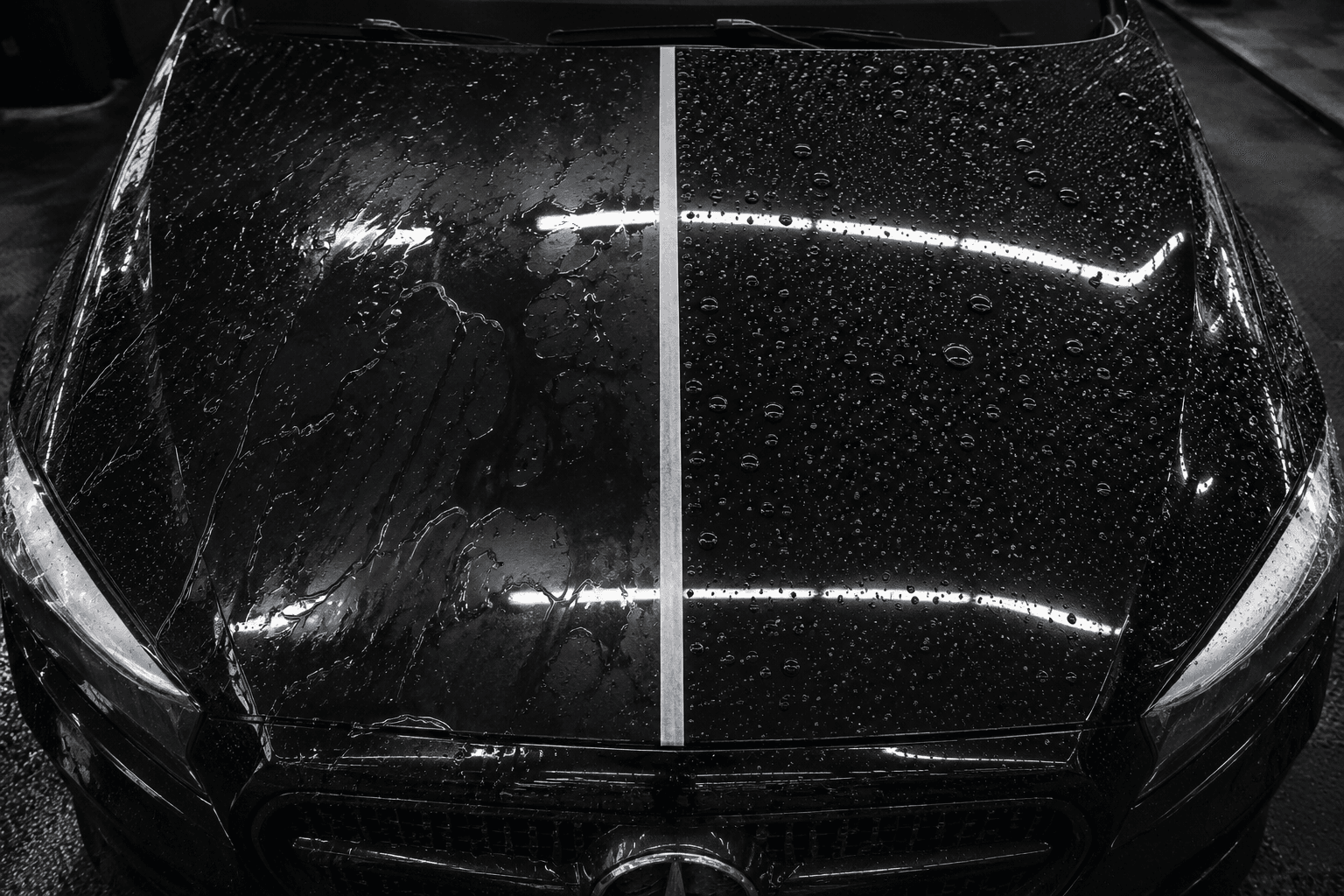
On a healthy coating, water pulls into tight beads and sheets off the panel when you tilt or move the car. As the coating wears, two things change, usually in this order:
- Beads get flatter and wider — they sit on the paint instead of standing on it
- Water stops sheeting and starts clinging in patches
Check the panels separately. The roof, bonnet and boot lid see the most UV and rain; the lower doors and rear bumper take the most road grit. Those areas will fail first while the sides still look perfect.
One thing that is not a failure signal
A coated car that looks dull is usually a dirty car, not a dead coating. Bonded contamination — traffic film, iron fallout, hard-water spotting — sits on top of the coating and flattens the gloss.
A proper decontamination wash often brings back most of what you think you lost. Judge the coating after that wash, not before it.
What actually shortens a coating's life
In rough order of impact:
- Automatic car washes with brushes. They abrade the coating and the clear coat underneath.
- Washing in direct sun, or letting it air-dry. Mineral deposits etch into the coating surface.
- Bird droppings and tree sap left on the paint. Both are acidic; a coating buys you time to remove them, not immunity.
- Aggressive or high-pH cleaners. Strong degreasers strip the hydrophobic layer faster than anything else on this list.
- Parking outside, unshaded, all year. UV is patient.
Two identical cars coated on the same day can be years apart in condition depending on this list alone.

A workable rule of thumb
- Check the water behaviour every few months, panel by panel
- When beading flattens noticeably on the horizontal panels, book an inspection — not a full reapplication
- Expect a topper or maintenance layer long before you need a full strip and recoat
- Full reapplication is a paint-correction job: it is worth doing properly, or not yet
Why a detailer will often tell you to wait
Reapplying a coating properly means removing what is left of the old one, correcting the paint underneath, and starting again. That is a real job, and doing it early wastes both the remaining coating and a little clear coat.
A good studio will look at the car and tell you it is fine for another season. If someone quotes a full recoat without inspecting the paint, get a second opinion.
The coating is doing its job right up until the moment you can measure that it isn't.
Look after the finish, and the finish looks after the car.

Telmo Antunes
detailmasters agent
I've been passionate about detailing ever since I bought my first car. After filming and photographing for some detailing studios I fell in love with the craft and dreamt of one day being able to work in that market. That's why I created Detail Masters, and that's why you can trust me to help you scale your business to the success it deserves.
Find a detailer near you
Browse vetted detailing studios, compare services and book online in minutes.
Browse studios